
How Temperature & Humidity Impact Your Test Equipment Accuracy
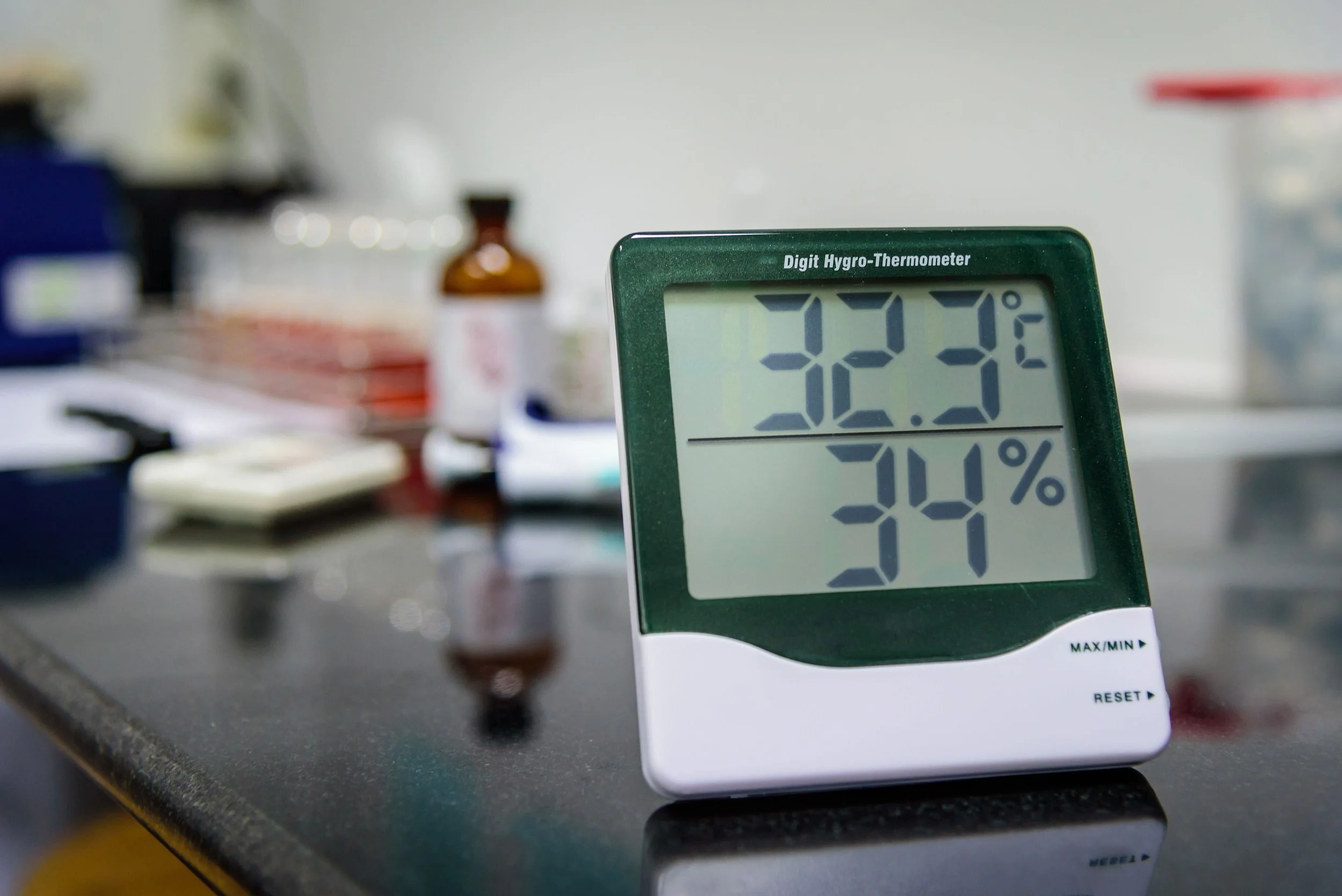
Accuracy in testing and measurement doesn’t depend only on your equipment, but it also depends on the environment your equipment is calibrated in. Temperature and humidity can significantly change how instruments behave, even when they appear to be working normally.
Temperature: A Silent Source of Measurement Drift
Electronic components change value as temperature changes. Even a few degrees can cause:
Resistance drift in DMMs and sensors
Frequency instability in counters
Voltage reference movement in power supplies
Noise increases in oscilloscopes and RF analyzers
Most instruments are designed to meet spec at 23°C, so calibrating them outside that range can produce misleading results.
Humidity: The Hidden Accuracy Killer
Humidity affects both electrical performance and physical materials. High humidity can lead to:
Leakage currents
Corrosion
RF path degradation
Low humidity increases the risk of ESD damage, which can shift measurements without leaving visible signs.
Why a Controlled Lab Environment Matters
At Tra-Cal, every calibration is performed in a temperature- and humidity-controlled ISO-compliant lab, giving your equipment:
Stable temperature calibration conditions
Controlled humidity to prevent corrosion and ESD
Continuous environmental monitoring
High repeatability and low measurement uncertainty
This means your equipment returns to you more stable, more accurate, and fully traceable to NIST standards.
Equipment Most Affected
Oscilloscopes
Spectrum analyzers
DMMs
Signal generators
Network analyzers
Power supplies
Torque tools & dimensional gauges
If it measures, then temperature and humidity influence it.
Trust Your Calibration to the Environment Built for Precision
Tra-Cal delivers reliable, traceable results because we control the variables that matter. Reach out to us today!